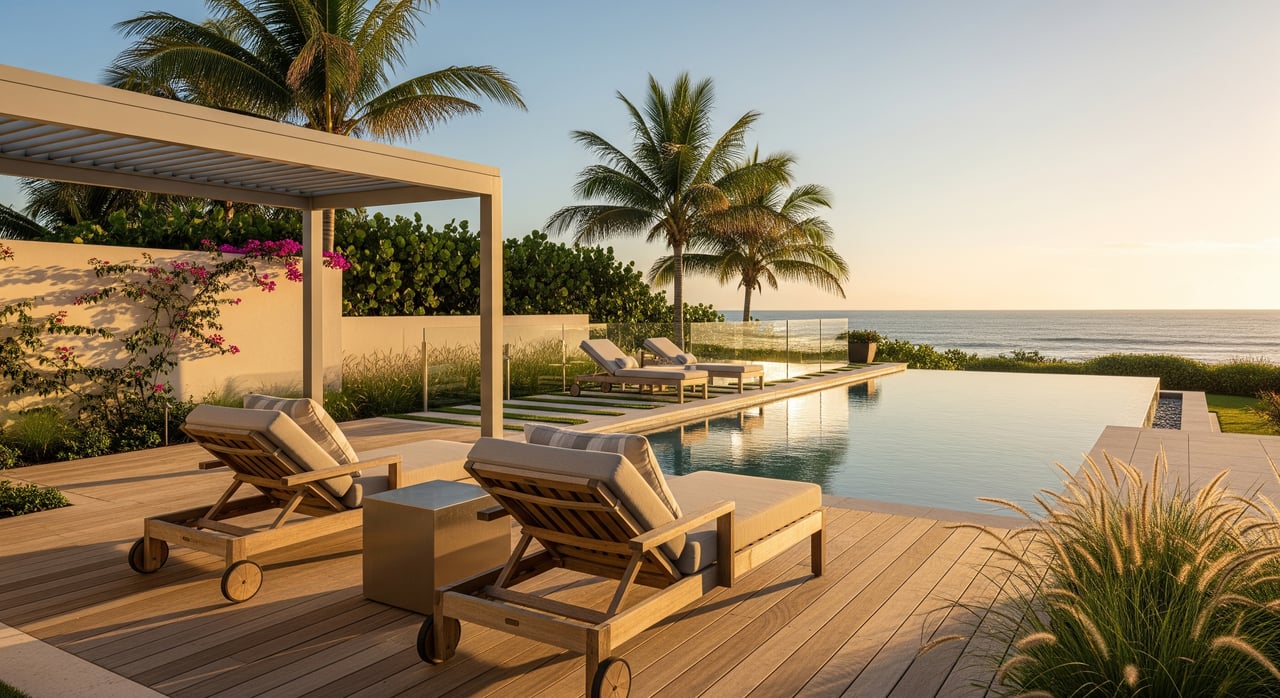
Love the ocean breeze, but not the corrosion it can bring? If you own or are planning a Palm Beach estate, you want outdoor spaces that look refined and stand up to salt, sun, and storms. With the right materials, finishes, and lighting choices, you can enjoy elegant outdoor living without constant repairs. This guide shares practical, coastal-tested selections and maintenance planning tailored to Palm Beach’s ocean and lake exposure. Let’s dive in.
Salt-smart design in Palm Beach
Salt air, high UV, and frequent wet–dry cycles accelerate wear on metals, stone, fabrics, and electronics. Choosing corrosion-resistant materials and UV-stable finishes is essential. Good design also plans for easy rinsing, access to parts, and periodic re-finishing where needed.
You want a balance of beauty and performance. Favor materials that age gracefully, specify replaceable components, and verify manufacturer test data for salt exposure. Durable choices reduce upkeep costs and help preserve long-term value.
Durable pool choices
Pools live in a high-salt, high-chlorine environment. Every component needs to resist pitting and staining.
- Metals and hardware: Choose 316 or 316L stainless for ladders, rails, anchors, and fasteners. Avoid 304 in ocean settings. Where different metals meet, use dielectric fittings to prevent galvanic corrosion.
- Pool finish: Pebble or quartz aggregate blends and high-quality polymer plasters hold up better than traditional white plaster. Use porcelain tile or glass mosaic at the waterline for durability.
- Coping and decking: Porcelain pavers, dense granites, or high-density engineered stone perform well. Avoid soft, porous stones unless you commit to long-term sealing.
- Equipment: Use pumps, heaters, and salt chlorine generators rated for pool and coastal exposure. House equipment in a ventilated, semi-enclosed area to limit salt deposition on electronics.
- Lighting: Select IP65 or higher fixtures with marine-grade housings, such as 316 stainless, bronze, or high-performance powder-coated aluminum. Confirm pool suitability in the product data.
Ask manufacturers for salt spray test data that references recognized methods, and review coastal warranty terms for peace of mind.
Resilient outdoor kitchens
Outdoor kitchens face grease, heat cycles, and constant salt air. Build them like a yacht galley.
- Cabinetry: Choose 316 stainless or HDPE/polymer cabinets made for marine environments. Powder-coated aluminum can be excellent when finished to AAMA 2604 or 2605 standards and maintained.
- Countertops: Porcelain slabs and dense granites are the lowest maintenance. If you prefer engineered quartz, protect seams and adhesives from standing moisture and salt spray.
- Appliances: Pick marine-rated models or 316 stainless faceplates. Design panels and access points so parts are simple to swap as they age.
- Plumbing and gas: Use corrosion-resistant fittings. Place shutoffs and regulators in sheltered, ventilated enclosures and use stainless or protected piping where code allows.
- Finishes: Large-format porcelain tile and polymeric grout reduce staining and salt crystallization compared to cementitious grout.
For cushions and covers, go with solution-dyed acrylic fabrics and quick-dry foam. Removable covers make cleaning and rinsing easy.
Terraces, decks, pergolas
Sun and salt attack exposed surfaces. Favor materials with low water absorption and UV stability.
- Decking and flooring: Capped composite boards with UV and moisture warranties perform well, and porcelain pavers offer excellent salt tolerance and slip-resistant options. Tropical hardwoods like ipe are beautiful and durable, but plan on oiling to maintain color and control checking.
- Structural framing: Avoid plain carbon steel in exposed areas. Use 316 stainless or hot-dip galvanized where properly detailed, or consider aluminum for pergolas with anodized or high-performance powder coat per AAMA 2604 or 2605.
- Fasteners and glass: Specify 316 stainless or silicon bronze fasteners. For glass railings, choose marine-grade fittings and detail for easy panel replacement.
- Coatings: Confirm powder-coat specifications and coastal warranties. AAMA 2605 is preferred in severe coastal exposure when budget allows.
Beachfront lighting rules
Beachfront lighting in Palm Beach must respect ecology and code. Guidance prioritizes sea-turtle protection during nesting and hatching season.
- Spectrum: Use long-wavelength sources, such as amber LEDs, that are less likely to disorient hatchlings. Verify spectral output and select fixtures designated turtle-friendly.
- Shielding and aiming: Choose fully shielded, downward-directed fixtures to prevent direct light visible from the beach. Add louvers, hoods, or recessing to control glare.
- Intensity and placement: Keep lumen output low toward the beach. Consider low bollards and wall washers that light terraces without spilling to shore. Use timers and motion sensors to limit nighttime light.
- Ratings and materials: Select marine-grade housings and optics, with IP65 or higher ratings for coastal conditions. Ensure drivers and controls are rated for outdoor use.
- Compliance: Confirm Town of Palm Beach and Palm Beach County lighting ordinances, and follow electrical code for wet locations, including required GFCI protection. When needed, submit fixture cut sheets and photometric plans for approval.
Maintenance made simple
Design for easy care, then stick to a schedule. Regular rinsing and inspections extend service life and keep finishes looking new.
- Monthly: Rinse metal, stone, and fabrics with fresh water. Clear terrace drains and gutters.
- Quarterly: Inspect fasteners for pitting, check caulking and weather seals, test GFCI outlets, and look for water intrusion in fixtures.
- Annually: Power-wash decks per product guidance, re-seal stone or concrete as recommended, service pool equipment, and have electrical inspected.
- Every 3–7 years: Re-coat powder-coated surfaces per the coating specification and exposure level.
- After storms: Rinse immediately, then inspect and replace any compromised fasteners or seals.
Plan for replaceable components in outdoor kitchens and pool areas so small parts can be swapped without tearing into built work. Ventilated equipment enclosures help protect mechanicals and electronics.
Spec and contractor guidance
Clear specifications and experienced trades make the difference in coastal projects.
- Write performance specs, not just brands: list stainless grade (316 or 316L), powder-coat standard (AAMA 2604 or 2605), fixture IP rating (IP65 or higher), and any beach-facing luminous limits.
- Prevent galvanic corrosion: require dielectric isolation where dissimilar metals meet and use silicon bronze or 316 stainless fasteners.
- Verify testing and warranties: request manufacturer salt-fog data and coastal exposure warranties. Clarify maintenance requirements that keep warranties valid.
- Choose local coastal pros: hire contractors with Palm Beach coastal references and, for beachfront lighting, teams experienced with turtle rules and municipal approvals.
Value and resale impact
Palm Beach buyers prize outdoor living, but they also notice deterioration and recurring maintenance. Salt-smart choices reduce visible wear and preserve the look and function of terraces, kitchens, pools, and lighting. Over time, that protects lifestyle, lowers upkeep, and supports resale value.
Palm Beach project checklist
- 316 or 316L stainless for exposed metals and fasteners
- Porcelain, dense granites, or engineered stone for coping and counters
- Capped composite or porcelain pavers for decks and terraces
- High-performance powder coat per AAMA 2604 or 2605
- IP65 or higher fixtures with marine-grade housings
- Turtle-friendly amber lighting, fully shielded and downward-directed
- Dielectric isolation for dissimilar metals
- Ventilated equipment enclosures for pool and electrical gear
- Documented salt-fog test data and coastal warranty terms
- Maintenance plan with monthly rinsing and periodic inspections
Your next step
If you want outdoor spaces that look refined year after year, start with the right specifications, then add a smart maintenance routine. When you need guidance on material selection, lighting compliance, or trusted local trades, you deserve an advisor who understands how luxury estates meet the coast. Request a Private Consultation with Matt Johnson for calm, discreet guidance tailored to your Palm Beach property.
FAQs
What pool materials hold up best in Palm Beach?
- Use 316 or 316L stainless for metal components, pebble or quartz aggregate finishes, and porcelain or glass mosaic at waterlines for durability.
Which outdoor kitchen cabinets resist salt air?
- Marine-grade 316 stainless or HDPE/polymer cabinets perform best, with powder-coated aluminum as a lighter option when finished to AAMA 2604 or 2605.
What decking is lowest maintenance near the ocean?
- Capped composite boards and porcelain pavers offer strong UV and moisture performance, with tropical hardwoods viable if you commit to periodic oiling.
How should beachfront lighting be specified for turtles?
- Choose long-wavelength amber LEDs, fully shield fixtures to aim light downward, minimize beach-facing lumens, and follow local seasonal ordinances.
How often should I rinse and inspect coastal finishes?
- Rinse monthly, inspect fasteners quarterly, re-seal or re-coat per product guidance, and perform immediate checks after storms to prevent corrosion spread.