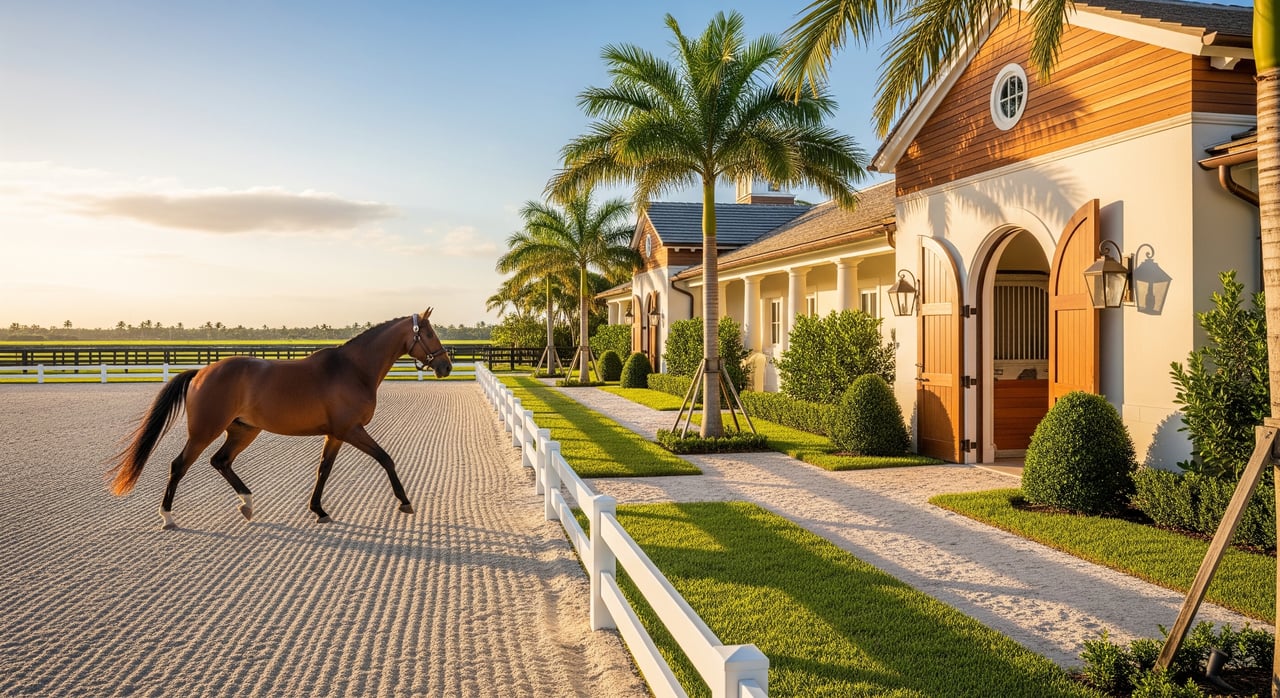
Ever wonder what a day actually looks like on a Wellington equestrian farm? You might picture crisp arenas, busy barns, and polished horses heading to show rings or polo fields. That’s real, but there is also a steady rhythm of care, maintenance, and planning that keeps everything working. In this guide, you’ll see the daily flow, the property features that make life easier, the local scene that shapes your schedule, and the practical questions to ask before you buy. Let’s dive in.
The daily rhythm of farm life
Mornings start early. You feed, check water, walk the aisles, and turn out. Stalls get mucked while the air is cool, then you set up for rides or lessons. Many riders prefer morning training in Wellington’s mild winter light.
Midday is about maintenance and vendors. You might drag the arena, adjust irrigation, and meet the farrier, vet, or a feed delivery. In summer, the heat slows the pace at noon, so you schedule most work in the early morning or later afternoon.
Late afternoon brings horses back in and a second feed. You check legs, clean tack, and plan tomorrow. If you are showing, you review the order of go and discuss any changes with your trainer or staff.
Seasonal tempo
Winter is peak season. From roughly January through April, show weeks and polo matches add energy to daily life. You see more trainers, grooms, and visiting professionals, and many businesses expand hours to support the pace.
Summer is quieter. You still school, but the focus leans toward facility care, arena work, and horse conditioning. You plan around heat, humidity, and afternoon thunderstorms.
Community culture
Wellington is equestrian-centric. The social calendar often revolves around barns, shows, and polo. You’ll meet a mix of full-time residents and seasonal owners, so think about whether you want a year-round home base or a winter-season hub.
Property features that work in Wellington
Think about how the property supports your program. Most farms blend a well-laid-out barn with safe turnout, a reliable arena, and smart infrastructure.
Barn layout and essentials
Barns often include multiple stalls, a tack room, feed room, wash bays, and storage. Many properties add an office and sometimes a groom apartment or guest suite. Good ventilation, organized storage, and easy hose and power access save time every day.
Arenas, footing, and drainage
Outdoor arenas with quality footing are common. Builders use layered bases and surface blends to reduce dust and keep traction consistent. Because of the high water table and heavy rain events, drainage design matters. Perimeter drains, retention features, and dependable irrigation help you ride after storms and manage footing in dry spells.
Turnout and fencing
Multiple paddocks allow safe rotation and rest for grass. Owners choose wood, vinyl, or heavy equine mesh for perimeter safety, with clearly marked gates. A round pen or hot walker adds flexibility for training and rehab days.
Utilities and systems
Reliable water is critical, including separate irrigation for arenas or pasture. Electricity must support lighting, pumps, hot water, and sometimes HVAC in tack rooms or living spaces. Plan for manure storage and removal, or composting, with odor and pest control in mind.
Safety and hurricane readiness
In Palm Beach County, property hardening is part of ownership. Roof tie-downs, reinforced doors, secure shutters, and elevated storage help when storms threaten. Have trailer parking and an evacuation plan, including pre-identified host barns and current paperwork for horses. Flood mitigation can include raised equipment, backup pumps, and attention to local flood zones.
The Wellington scene and services
Palm Beach International Equestrian Center anchors the show culture in town, with the Winter Equestrian Festival drawing riders, trainers, and vendors each winter. The International Polo Club Palm Beach adds a distinct polo presence that shapes weekends and social plans. Schedules and entry requirements can vary by season, so confirm details directly with organizers.
Support services are extensive. Multiple equine veterinarians and hospitals serve sports medicine and emergencies. Farriers and dentists travel barn to barn. You can source feed, tack, hay, and bedding locally. Arena builders, footing suppliers, barn contractors, and professional haulers are used to the demands of the winter season and the area’s soils and drainage.
Zoning and compliance matter. Wellington and Palm Beach County have specific standards for agricultural and equestrian uses. If you plan commercial boarding, lessons, or breeding, verify permitted uses, setbacks, and any special approvals with local officials.
Climate, health, and horse care realities
Wellington’s climate is tropical and humid subtropical. Summers are hot and humid with frequent afternoon thunderstorms. Winters are mild, which is a key reason for the busy show season. The Atlantic hurricane season runs from June 1 to November 30, so storm prep is a core part of ownership.
You will likely adjust riding times around heat and weather. Arena watering and irrigation schedules help footing perform in both wet and dry periods. Pasture management includes fertilization and weed control suited to warm-season grasses.
Equine health protocols are essential. Standard vaccination programs often include EEE/WEE, West Nile, rabies, tetanus, equine influenza, and equine herpes, with local veterinarians tailoring timing based on regional disease pressure and travel. Mosquito control is important due to vector-borne risks. With many horses moving in and out for shows and polo, simple biosecurity habits like isolating new arrivals and routine surface disinfection help reduce disease spread.
Paperwork is part of the routine. Expect up-to-date Coggins tests and health documentation for events or transport. Requirements can vary by show and state lines, so confirm details ahead of time.
Cost categories and staffing
Ownership costs vary by program and scale, but most farms budget across a few common areas:
- Property taxes and insurance, including hurricane and flood coverage where applicable.
- Barn and facility maintenance, such as arena grooming and resurfacing, fencing repairs, pest control, irrigation and pump service, and septic or sewer.
- Horse care, including feed, hay, bedding, farrier, routine and emergency veterinary care, dentistry, vaccinations, and supplements.
- Staffing, from full-time managers and grooms to seasonal help during winter.
- Utilities and equipment, including electricity, water, and fuel for generators if needed.
Many owners choose a mix of self-care and full-care support. Be honest about the daily hours you want to commit and hire accordingly during the busy season.
Buyer checklist for Wellington farms
Use this list to focus your due diligence:
- Zoning and permitted uses: Are boarding, lessons, or breeding allowed on this parcel? Any special permits required?
- Flood zone and insurance: What flood zone is it in? What is the insurance landscape and claims history?
- Water and irrigation: Municipal or well water? Is there separate irrigation capacity for arenas and pasture?
- Stall count and turnout: Does the acreage comfortably support your planned number of horses?
- Key systems: Barn roof and structure, arena base and footing composition, fencing condition, septic and utilities, electrical load.
- Hurricane and evacuation: What is the plan for horses in a major storm? Are trailers accessible and road-ready?
- Service access: Which vets, farriers, feed suppliers, and haulers serve the area, and how quickly can they respond in winter?
- Pasture management: Fertilizer and pesticide history, drainage performance, and manure management routines.
- Nuisance and neighborhood: Proximity to busy roads or higher-traffic areas, plus privacy and security factors.
A few real-life vignettes
Picture a winter show day. You start under soft morning light, feed, and ride a light school before shipping to the showgrounds. A farrier swings by midmorning, while a groom preps tack. You return at dusk, ice and walk, then feed and debrief for the next class.
On a summer storm day, you ride early, finish turnout, and drag the arena before lunch. The radar hints at a fast-moving cell, so you secure loose items and close up. After the downpour, drainage outlets are checked and you plan late-day lunge work when the footing settles.
On a polo Sunday, the barn is calm in the morning. Later, you meet friends at a match and pick up a feed order on the way back. The evening wraps with a last walk down the aisle and one more water check in the paddocks.
Is Wellington a fit for your lifestyle?
If you thrive in an equestrian-focused community with a clear seasonal rhythm, Wellington delivers. You can run a private program, compete at major shows, or enjoy polo-focused weekends. The key is choosing a property whose infrastructure fits your goals, your horses, and your calendar.
Think about how many horses you will manage, what kind of arena and footing you prefer, and how much time you want to spend on daily care. Balance that with staffing and the support services you will rely on during the winter season.
Next steps
If you are considering a Wellington farm, it pays to walk properties with someone who lives the lifestyle and understands the technical details, from footing and drainage to hurricane prep and zoning. For a discreet, informed conversation about what will fit your program, connect with Matt Johnson.
FAQs
What is the day-to-day routine on a Wellington farm?
- Expect early feeds and turnout, morning rides or lessons, midday maintenance and vendor visits, then evening bring-in and checks, with the tempo rising during winter show season.
How does Wellington’s climate affect riding schedules?
- Summers are hot and humid with frequent afternoon storms, so most schooling happens early or late, while mild winters support more training and show activity.
What property features matter most for Wellington farms?
- Reliable drainage and quality arena footing, safe turnout and fencing, well-planned barns with storage and wash bays, plus strong water, power, and manure systems.
How do hurricanes impact equestrian properties in Palm Beach County?
- Owners prepare with property hardening, shutters, secure storage, and clear evacuation plans for horses, since hurricane season runs from June 1 to November 30.
What health documents are needed for shows and transport in Florida?
- You typically need a current negative Coggins test and up-to-date vaccinations, with event-specific health papers as required; verify details with organizers.
What are common ongoing costs for a Wellington equestrian farm?
- Budget for insurance and taxes, barn and arena upkeep, horse care, staffing, utilities, and periodic footing or fencing improvements.