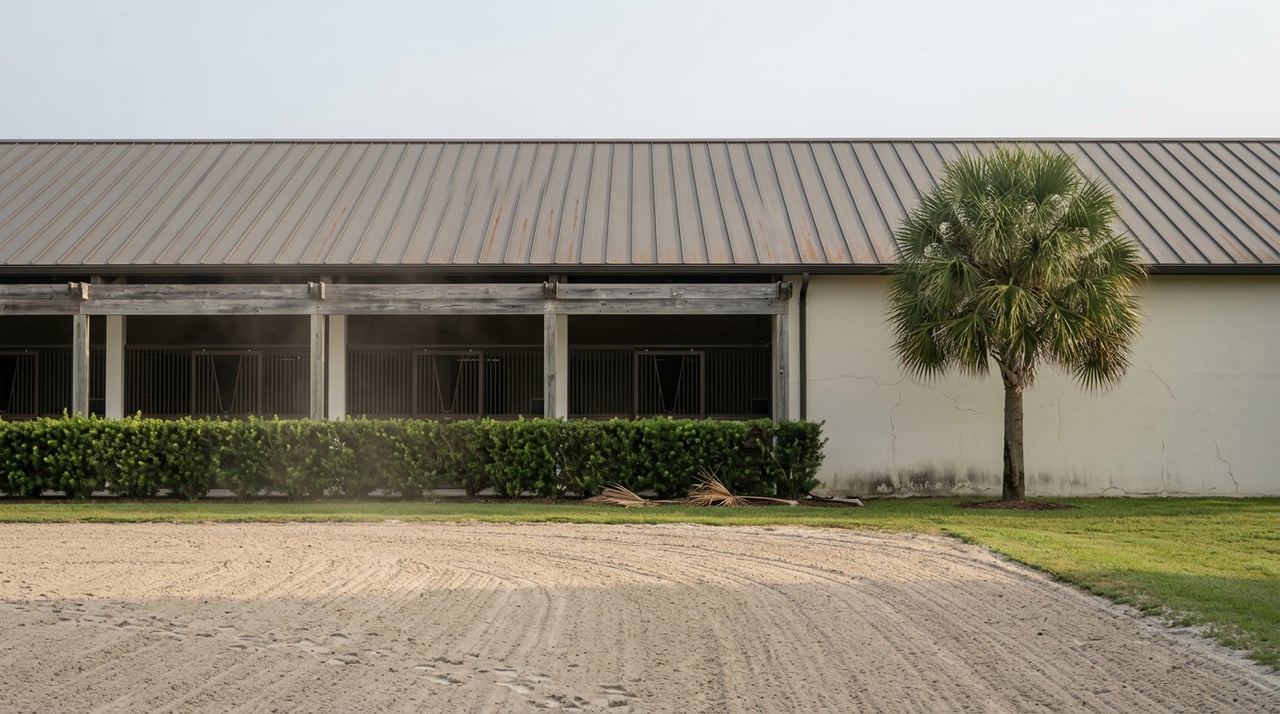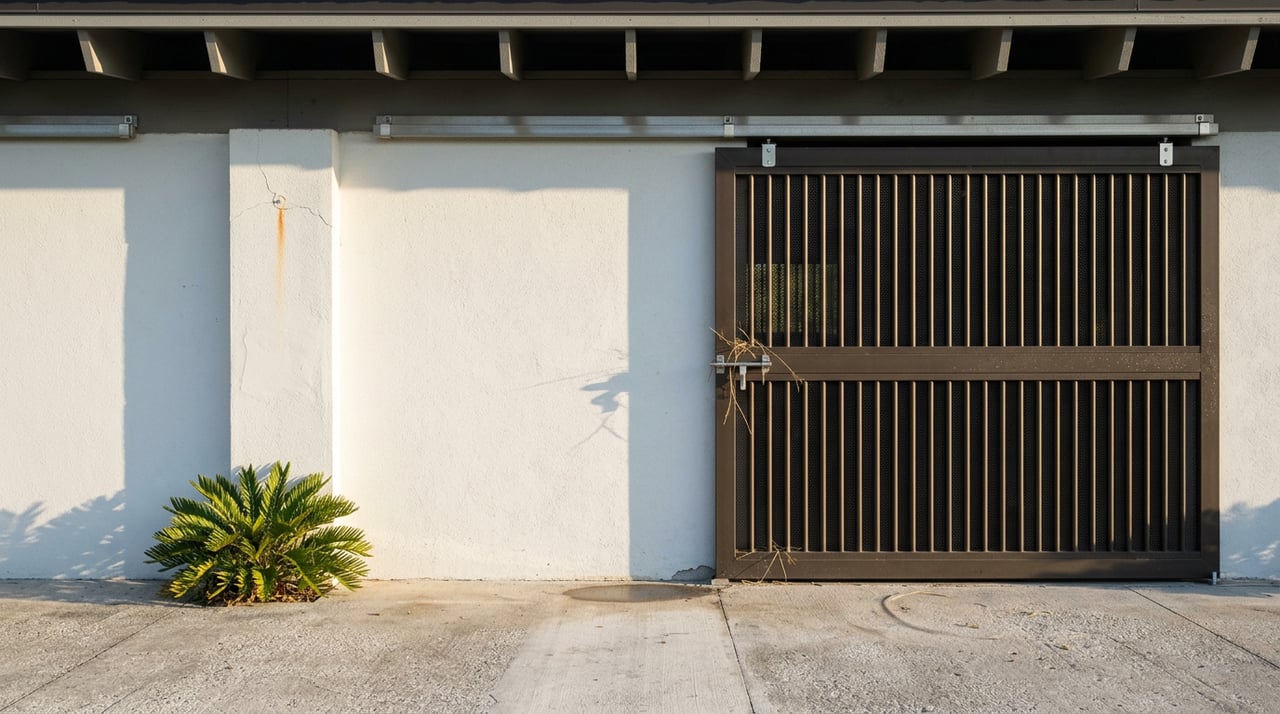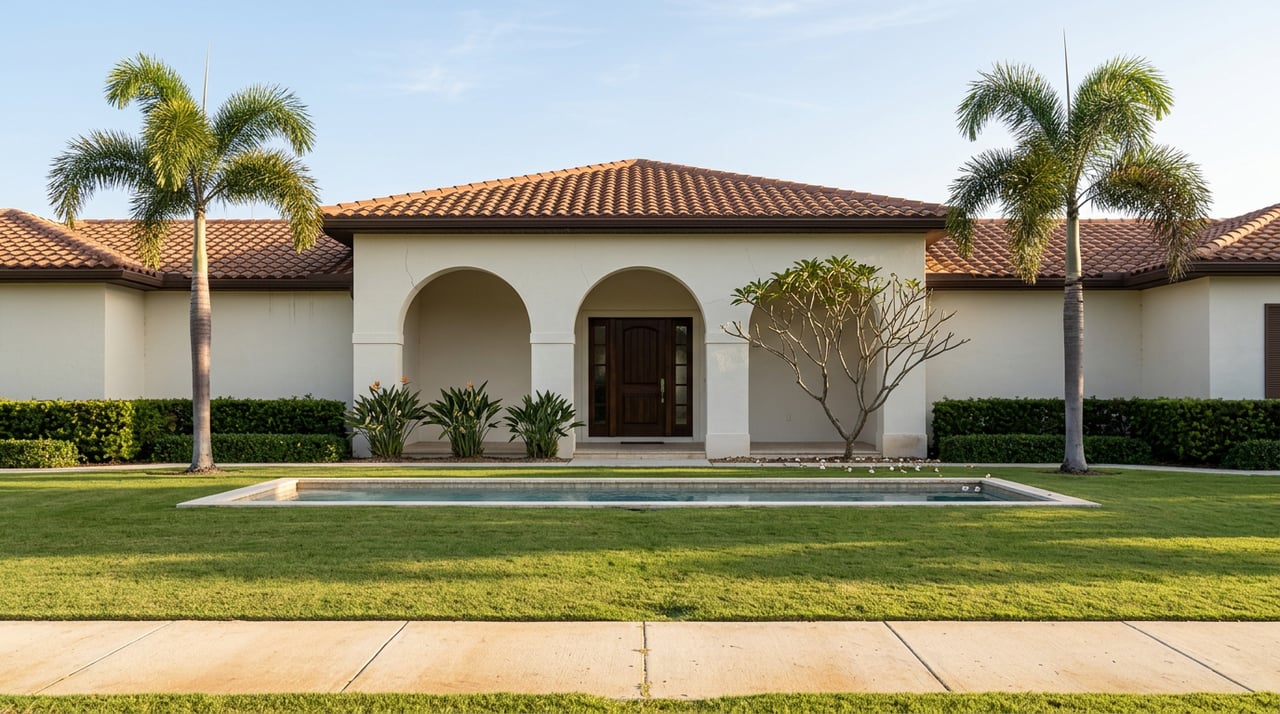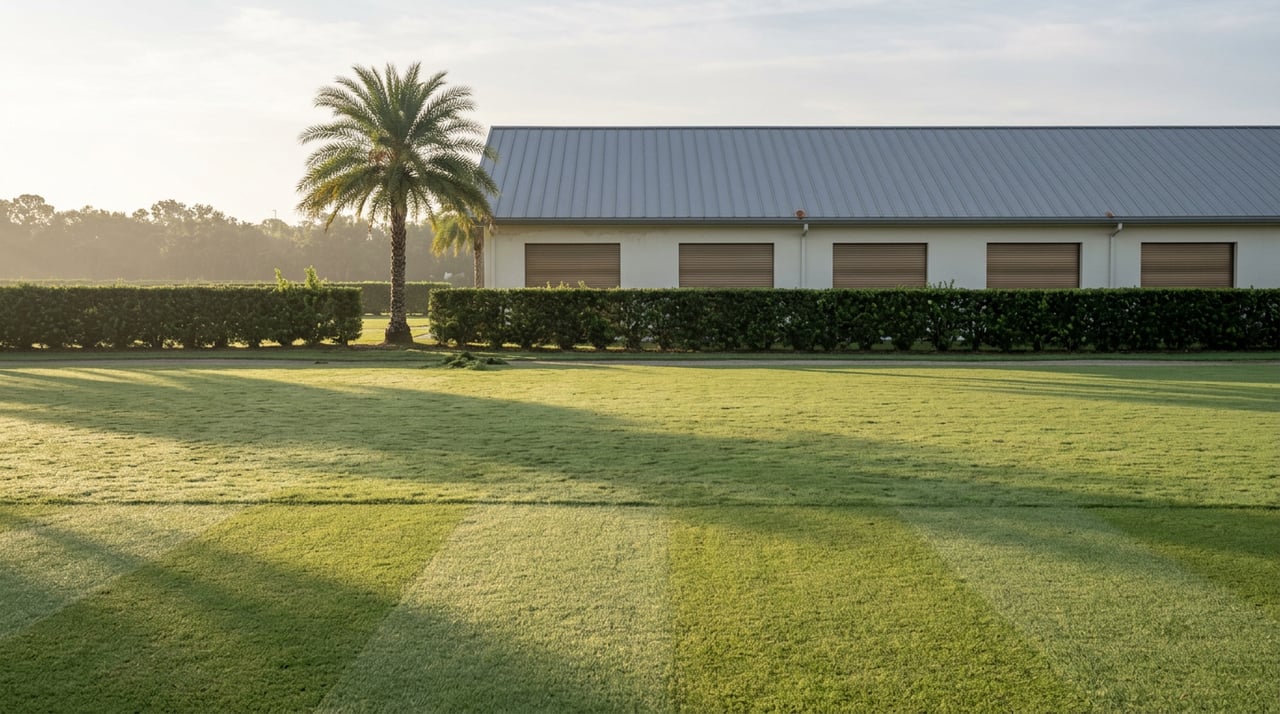
Drive Pierson Road toward South Shore Boulevard most mornings this September and you will pass earthmovers, pipe stacks, and a chain-link perimeter with no signage explaining what is behind it. There was no press conference when the work started. No banner across South Shore announcing a grand opening. If you didn't already follow the show circuit, you would have no reason to know that the empty pasture south of Wellington International is becoming a 98-acre showgrounds with its own name, its own drainage engineering, and its own effect on how long Wellington's winter actually lasts.
That quiet is deliberate. Wellington International South is set for a fall 2026 soft launch, with its full competition debut arriving in 2027. Soft launches don't get ribbon cuttings. But the infrastructure going into the ground right now, the kind engineered for a hundred-year storm and not a photo op, is the real tell that this isn't a cosmetic expansion. It's a bet that Wellington's season is about to get longer at both ends, and residents who live near South Shore Boulevard will feel that before most of them read a press release about it.
Ninety-Eight Acres, Zero Fanfare
Wellington International, the operator behind the Winter Equestrian Festival and the Adequan Global Dressage Festival, is expanding its total footprint to 215 acres by developing 98 of them into a new campus called Wellington International South. The new grounds add four National-level hunter and jumper rings, labeled A through D, contributing roughly 290,800 square feet of competition and schooling space, plus two National dressage rings measuring 225 feet by 420 feet each.
Michael Stone, president of Wellington International, has been direct about why. For years the venue turned away business it had no room to host.
"We have such a demand for different levels of competition and we just weren't able to fulfill it because we didn't have enough rings to do it in," Stone said.
That's not marketing language. It's a capacity problem being solved with concrete and drainage pipe, which is a different kind of commitment than a rendering.
The Field Is the Actual Announcement
If you want proof this expansion is built to last rather than built to open once and coast, look at the Derby Field. Wellington Lifestyle Partners president Paige Bellissimo engaged Richard Hayden of Hayden Turfcare in 2024, a turf designer with roughly 1,000 projects across 52 countries, to build a natural grass surface that performs year-round in South Florida, not just during the dry months when grass is easy.
The engineering underneath the field is built for two failure modes at once. Beneath the surface sits an attenuation cell system designed to manage water from a one-in-100-year storm event, routing it through underground infrastructure pipes to a designated outlet before the field ever floods. On the opposite end of the weather spectrum, the irrigation system can lay down about two inches of water in roughly fifteen minutes if South Florida goes dry for a stretch. Hayden has said the surface's engineered give may open up course designs that weren't possible on the old Derby Field, since the soil profile is built to absorb impact rather than return it to the horse. That's a level of specificity you don't apply to a facility you expect to use for one season and reconsider.
The field includes a dedicated tailgating area, which tells you the venue is planning for spectators as much as competitors. This is not a soft launch that stays soft.
What "Longer" Actually Means
Here is the part that matters if you live in Wellington and don't own a horse. Riders who compete on the winter circuit typically relocate to Wellington from mid-November through May. According to Stone, the added ring capacity at Wellington International South could shift that window earlier and later, with competitors arriving as soon as the end of October and staying into June.
That's not a marginal schedule change. It stretches the golf cart crossings and out-of-state license plates that already define winter here further into fall on one end and further into early summer on the other. One of the drivers behind the expansion is competitive pressure from Ocala, home to its own large-scale venue, the World Equestrian Center, which has been drawing shows and riders that used to default to Wellington. Building more rings and a longer usable season is Wellington International's answer to that competition, and the practical result for anyone commuting along South Shore Boulevard is a show season that used to have a clear off-ramp in May now bleeding into early summer.
The venue is also managing the traffic question directly rather than leaving it for residents to discover later. Wellington International has confirmed:
- Road widening at the Pierson Road and South Shore Boulevard intersection
- Similar widening at Gracida and South Shore Boulevard
- Expanded golf cart shuttle routes connecting the North and South properties, alongside thousands of new parking spaces for cars and carts
There's a second, quieter land-use shift tied to all of this. The current Equestrian Village, the longtime home of competition rings in this part of Palm Beach County, is being phased out as the new South campus comes online. That land will become part of The Wellington North, a housing community from Wellington Lifestyle Partners inside the village's Equestrian Preserve. The same company building the new competition rings is also the one turning the old ones into rooftops, which is worth knowing if you've ever wondered why the Equestrian Preserve looks different depending on which direction you're driving.
The Other Season Getting Bigger, on a Different Piece of Land
It's easy to assume every equestrian headline in Wellington traces back to Wellington International, but the National Polo Center, a separate 300-plus acre property managed by the United States Polo Association rather than Wellington Lifestyle Partners, just announced its own expanded 2027 winter season. The two operations run on different calendars, different ticketing systems, and different fields, which is a distinction that matters if you're trying to plan around either one.
NPC's 2027 season opens Sunday, December 27, 2026, with the Heritage Cup final following on January 3, 2027, and competition continuing through the first weekend of May 2027. The centerpiece remains the Gauntlet of Polo, a three-part series culminating in the U.S. Open Polo Championship, alongside the NPC 16-Goal Championship and the National President's Cup, now in its fourth season at the venue. The U.S. Open Women's Polo Championship semifinals and final land at NPC on February 14, 2027, and for the first time ever on U.S. soil, the property will host the II Federation of International Polo Women's World Polo Championship. Season, box seat, tailgate, and Sunday brunch tickets go on sale November 18 at the National Polo Center's site.
That's a genuinely new event on Wellington's calendar, not a repeat of last year with a new date stamped on it. Combined with Wellington International South coming online across town, the two biggest equestrian properties in Wellington are both getting bigger and busier in the same twelve months, on separate parcels, under separate management, for separate reasons.
Two Calendars, One Town
None of this requires anyone to do anything differently this month. The soft launch at Wellington International South is exactly that, soft, with root systems still filling in on the new Derby Field and the new rings having only opened for exercise use during last winter's WEF season, not full competition. But the pattern underneath the quiet is worth noticing before it's loud. A hundred-year storm drainage system isn't built for a venue that might not stick around. Road widening at two intersections isn't funded for a traffic bump that resolves itself. And an earlier arrival and a later departure on the winter season isn't a rounding error if you live along the route between South Shore Boulevard and anywhere else in town.
Wellington has absorbed bigger show seasons before. This is the first time in a while the infrastructure arrived before the fanfare instead of after it.
If you're watching how these two expansions, one on a new campus and one on an existing property, might reshape which parts of Wellington see the most activity and value over the next few winters, Matt Johnson has been tracking both properties from the ground for two decades of show seasons. Request a Private Consultation if you'd like to talk through what it means for a specific address rather than the town in general.