If you live in Wellington and don't ride, there's a good chance you think the horses leave in the spring. The polo divots get raked over, the WEF traffic thins out on Pierson Road, and by May you've mentally filed the whole show season under "done until January." That assumption is wrong, and it's wrong in a specific, checkable way: competition at Wellington International never actually stops. It just changes address for six months, moving from the main showgrounds on Equestrian Club Drive to a second venue a few miles away on South Shore Boulevard, where it's still running right now, still free to watch, and still mostly invisible to anyone who isn't already inside the sport.
The Venue Split Nobody Explains Well
Wellington International operates on two campuses, and most residents only know the one that gets the headlines. From November through April, the main grounds at 3400 Equestrian Club Drive host the Winter Equestrian Festival, the circuit that fills the roundabouts with golf carts and puts Wellington on international sport calendars. That's the version everyone pictures.
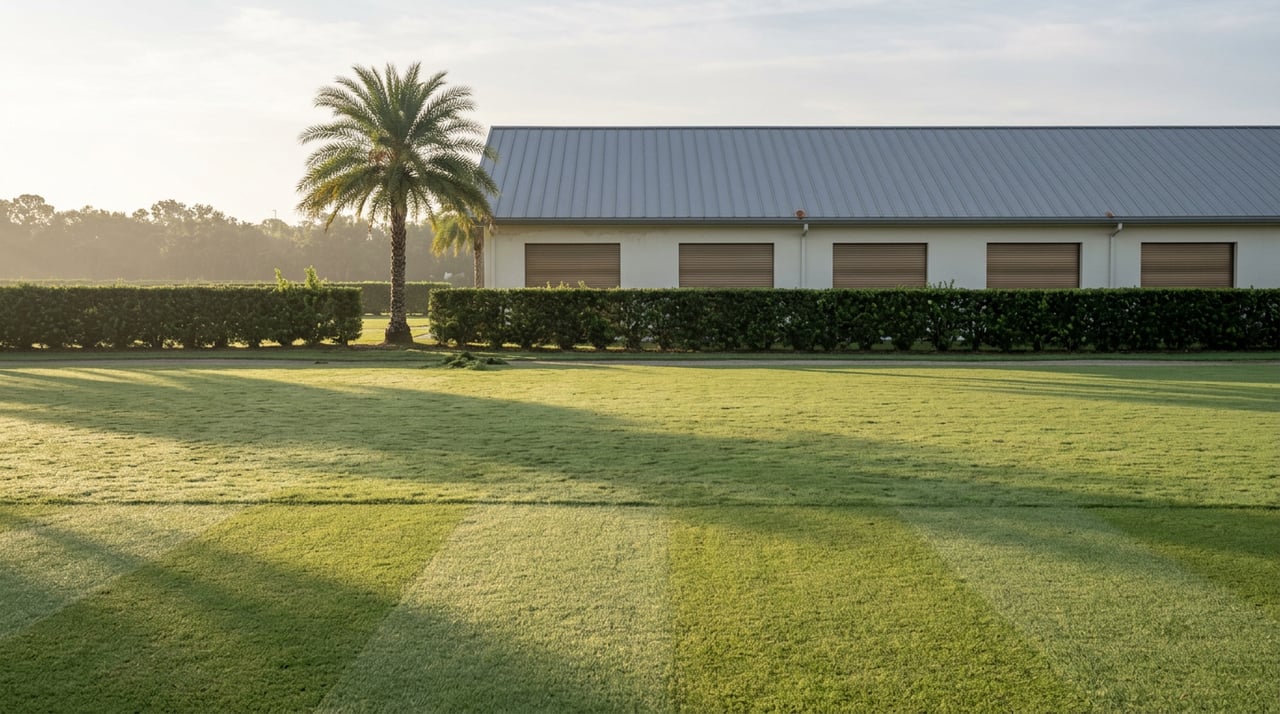
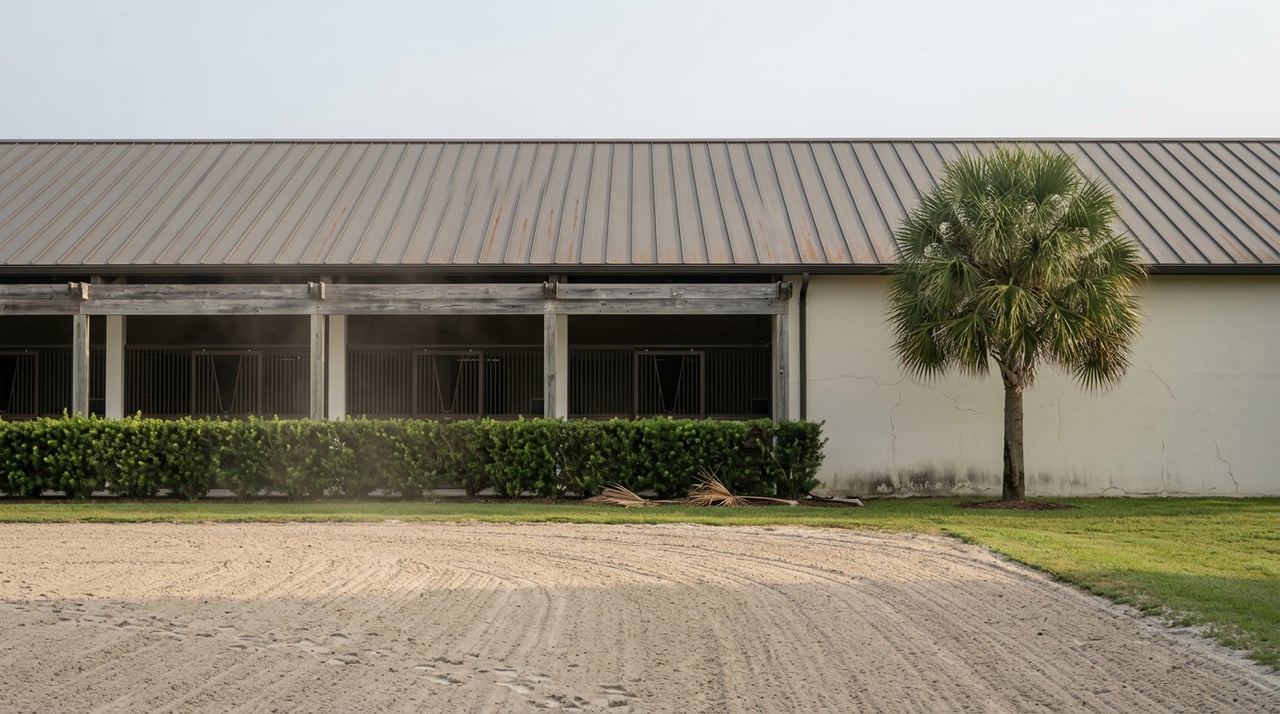
But from May through October, the competition doesn't disappear. It relocates to Equestrian Village at 13500 South Shore Blvd, where Wellington International runs an expansive grass derby field, additional show rings, and a covered arena for the same caliber of hunter/jumper competition, just without the winter crowds. Right now, that's exactly what's happening. The ESP Fall Series has show weeks scheduled September 25-27, October 1-4, and October 8-11, all at Equestrian Village.
If you've driven past that stretch of South Shore and assumed it was just another private farm, you weren't wrong that it's private property. You were wrong that nothing's going on inside it.
What's Actually New This Year
The reason this fall's shows are worth a look isn't just that they exist. It's that Wellington International has been quietly investing in Equestrian Village at a scale that suggests this isn't a placeholder venue between WEF seasons. The property recently completed a new grass derby field as part of a footprint expansion that now covers more than 200 acres. The field was designed by Richard Hayden and his firm, Hayden Turfcare, in collaboration with Wellington Lifestyle Partners, and it was built specifically to hold up under South Florida's rain patterns without turning into the kind of footing problem that ends a competition day early.
That's not a detail most spectators would notice walking the grounds, but it's the kind of infrastructure choice that tells you how a venue is being positioned. A grass field engineered for wet-season reliability isn't something you build for a venue you expect to sit idle. It's something you build for a venue you expect people to keep showing up to, on a schedule that runs most of the calendar year.
What "Free" Actually Means Here
The word "free" gets used loosely around Wellington's equestrian events, so it's worth being precise about what it covers at Equestrian Village specifically. Admission to the daytime hunter/jumper shows is free and requires no ticket. Parking is also free for these daytime classes, which is a meaningful distinction if you've ever attended a Saturday Night Lights grand prix at the main Wellington International grounds, where onsite parking runs $25 per car during those evening events. The Fall Series shows happening now are the daytime version: no gate fee, no parking fee, no advance registration.
Shows run Thursday through Sunday, starting around 9 a.m. That window matters if you're planning a visit around a weekday off or a weekend morning before the heat sets in. You're not committing to a full day. You can walk the grounds for twenty minutes on your way to somewhere else and still see international-level competition up close, which is a strange kind of ordinary for a place that also happens to draw competitors from every U.S. state and more than 55 countries each year.
The Rules That Keep It Open to Everyone
Free access comes with a short list of expectations that exist for the horses' sake more than the crowd's. Pets are welcome but must stay leashed. Outside food and drink, including coolers, aren't permitted on the grounds. And because these are working animals mid-competition, the venue prohibits drones, fireworks, balloons, and anything else that could startle a horse mid-round. None of it is complicated, but it's worth knowing before you show up expecting a backyard-barbecue version of a horse show. This is still a sanctioned competition. You're a guest at someone else's workday.
Why the Timing Matters
The show weeks currently posted run through October 11. What happens after that isn't something Wellington International has published yet, and it's not worth guessing at. What is worth acting on is the fact that the window you have right now, three more show weekends before mid-October, is a real one with a real end date. If you've been meaning to see what's actually happening on that stretch of South Shore Boulevard, this isn't a someday errand. It's a specific number of weekends.
There's something almost counterintuitive about a town built around a January-to-March spectacle having its quieter, more accessible version running in the background for the other seven months. Wellington's identity as the world's winter equestrian capital tends to obscure the fact that the sport itself doesn't take a summer off here. It just gets smaller crowds, cheaper parking, and a venue most residents have never had a reason to walk into.
That's worth knowing if you live here, even if you never plan to sit on a horse. Wellington's character isn't only the packed grandstands of February. It's also a grass field built by a turf specialist for a competition that keeps running in October with nobody watching but the people who showed up.
If you're the kind of resident who likes knowing what's actually happening in your own town before it shows up in a headline, that's the whole point of paying attention here. And if equestrian infrastructure, footing, and how a property actually functions day to day is ever relevant to a real estate conversation you're having, that's the specific expertise Matt Johnson built his practice around. Request a Private Consultation when that conversation is ready to happen.